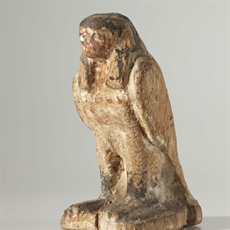
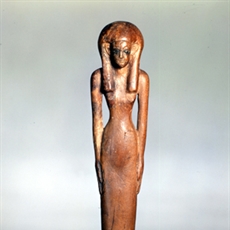
Wooden statuette of Ba bird Museum Mimara, Zagreb Collection of the Ancient CivilizationsInv. no. ATM 242 Egypt, unknown siteThird Intermediate Period (1069-664 B.C.)wood12.8 x 8 cm
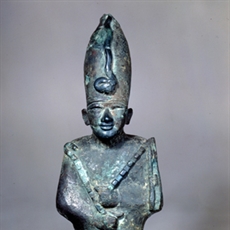
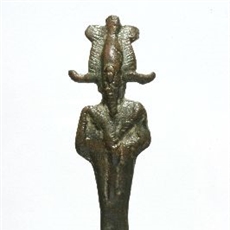
Osiris Museum Mimara, Zagreb Collection of the Ancient CivilizationsInv. no. ATM 238 Egypt, unknown siteThird Intermediate Period (1069-664 B.C.)bronze. 59 x 22 cm
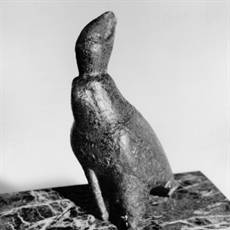
Bronze statuette of Horus Museum Mimara, Zagreb Collection of the Ancient CivilizationsInv. no. ATM 239 Egypt, unknown siteNew Kingdom (1539-1069 B.C.) bronze6.5 x 3 cm
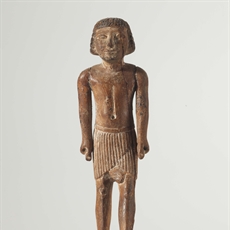
Statuette of a carrier Museum Mimara, Zagreb Collection of the Ancient CivilizationsInv. no. ATM 243 Egypt, unknown siteMiddle Kingdom (c. 2055-c. 1650 B.C.)12th Dynasty (c. 1985-1773 B.C.) wood14.2 x 4.4 cm
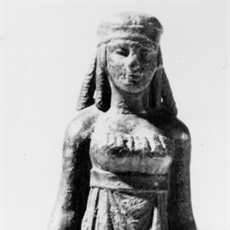
Statuette of a woman Museum Mimara, Zagreb Collection of the Ancient CivilizationsInv. no. ATM 244 Egypt, unknown siteMiddle Kingdom (c. 2055-1650 B.C.)-New Kingdom (1539-1069 B.C.) wood and silver24 x 5.4 cm
Bronze statuette of a woman Museum Mimara, Zagreb Collection of the Ancient CivilizationsInv. no.: ATM 240 Egypt, unknown siteHellenistic period (332-30 B.C.)-Roman period (30 B.C.-395 A.D.)bronze. 16.8 x 5.2 cm
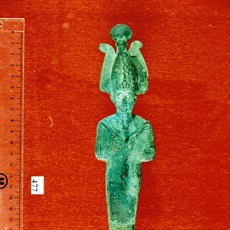
Statuette of OsirisDubrovnik museums, DubrovnikArchaeological museuminv. no. 477Egypt, unknown siteHellenistic period (332-30 B.C.)bronze28.5 x 5.3 x 3.5 cm
Statue of Osiris Split Achaeological Museum Inv. no. AMS H374 Croatia, Solin or Central Dalmatia Bonze with green patina Height ( without the thorn ) 7 cm
Statue of Osiris
Split Achaeological Museum
Inv. no. AMS H374
Croatia, Solin or Central Dalmatia
Bonze with green patina
Height ( without the thorn ) 7 cm
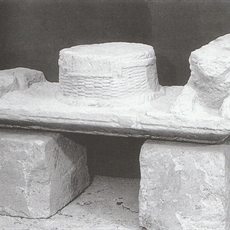
Cornice of sepulchral stele with a pair of lionsMuseum of Slavonia, Osijekinv. no. MSO AA-6148 Dalj (Teutoburgium)2nd half of the 2nd c.-1st half of the 3rd c. A.D. limestone: stone cutting37 x 110 cm, lenght=47 cmarchaeological excavation, 1951.